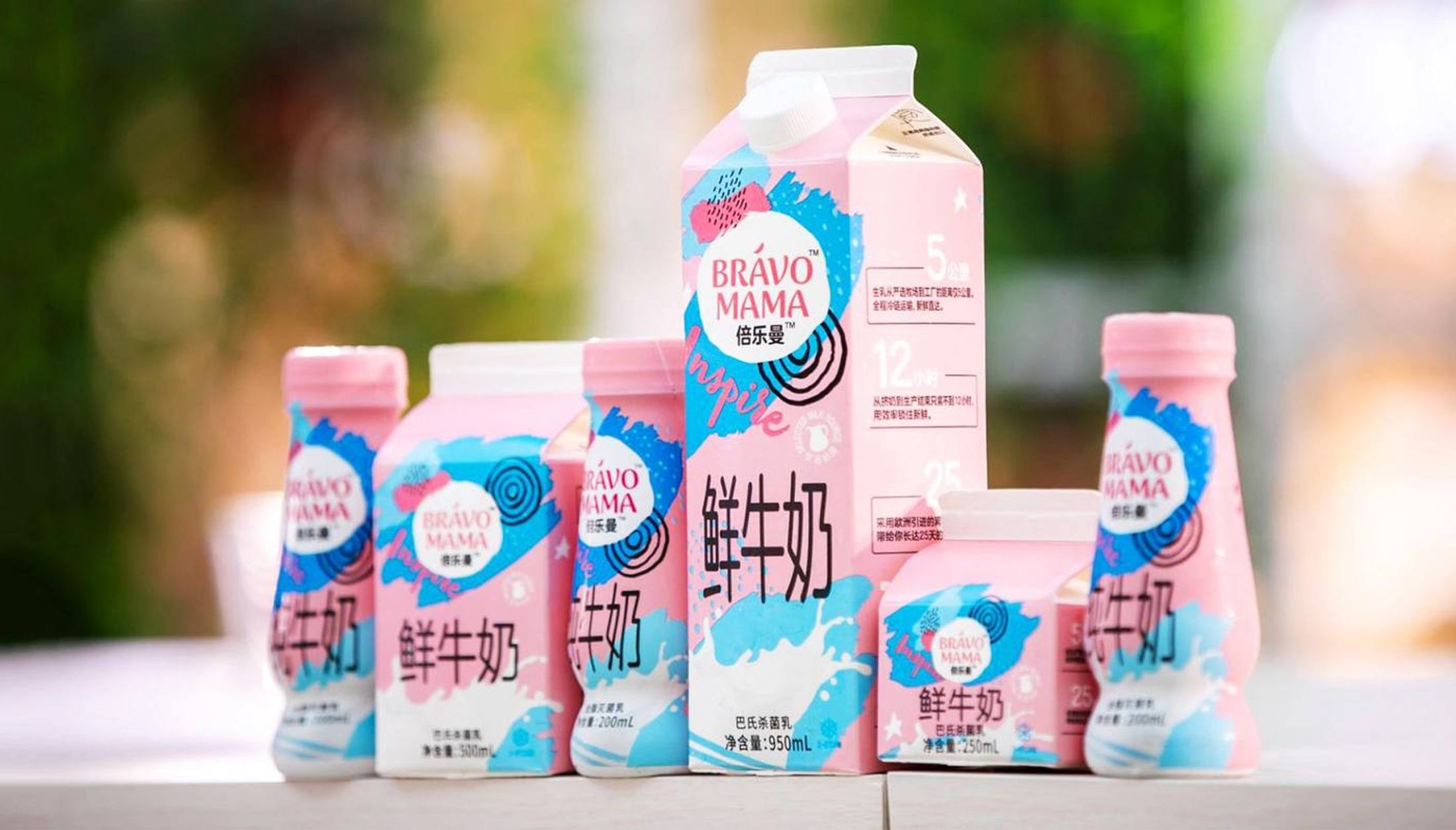
An own brand created for the Chinese market rather than adapted to it—built on the one thing the category refused to say to mothers.
A foreign dairy brand in China starts with a liability, not a heritage.
Food Union was producing in China and needed a brand of its own for the market. No heritage cue the Chinese shopper recognized, no shelf logic to slot into, no reference price. The category was crowded with domestic players who understood the shopper better and could move faster.
Standard category methodology assumes a formed context—you find the white space on a shelf that already exists. That shelf was being rebuilt every eighteen months. Anything designed against current behavior would be describing the past by the time it reached production.
Build the brand on an insight the category was avoiding, then make the shelf obey it.
The audience was young mothers in Shanghai, Beijing and other tier-one cities. The usual dairy playbook addresses them as mothers first. Research said the opposite: motherhood had not replaced ambition, and these women were still learning, working and looking for approval of their own achievements. The brand congratulates the ambition rather than the sacrifice.
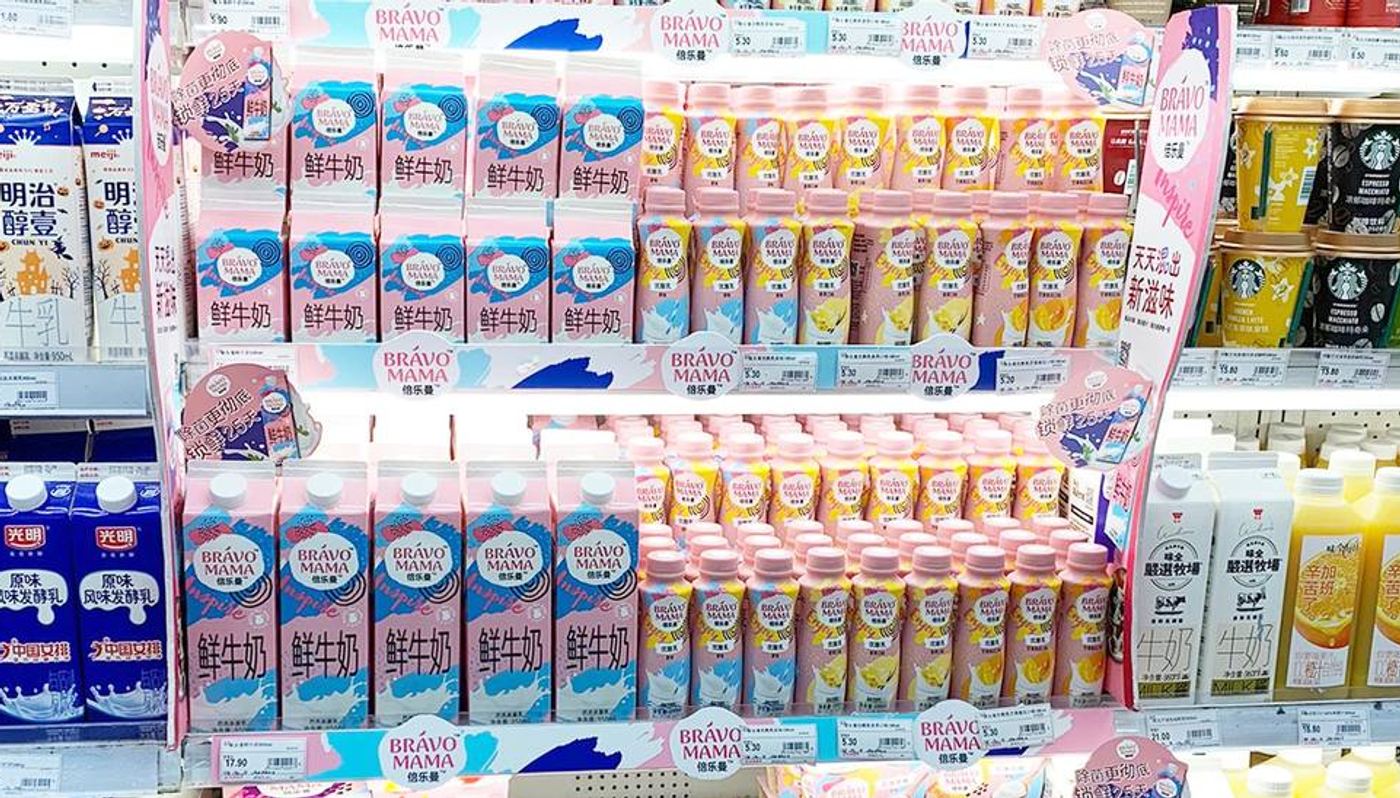
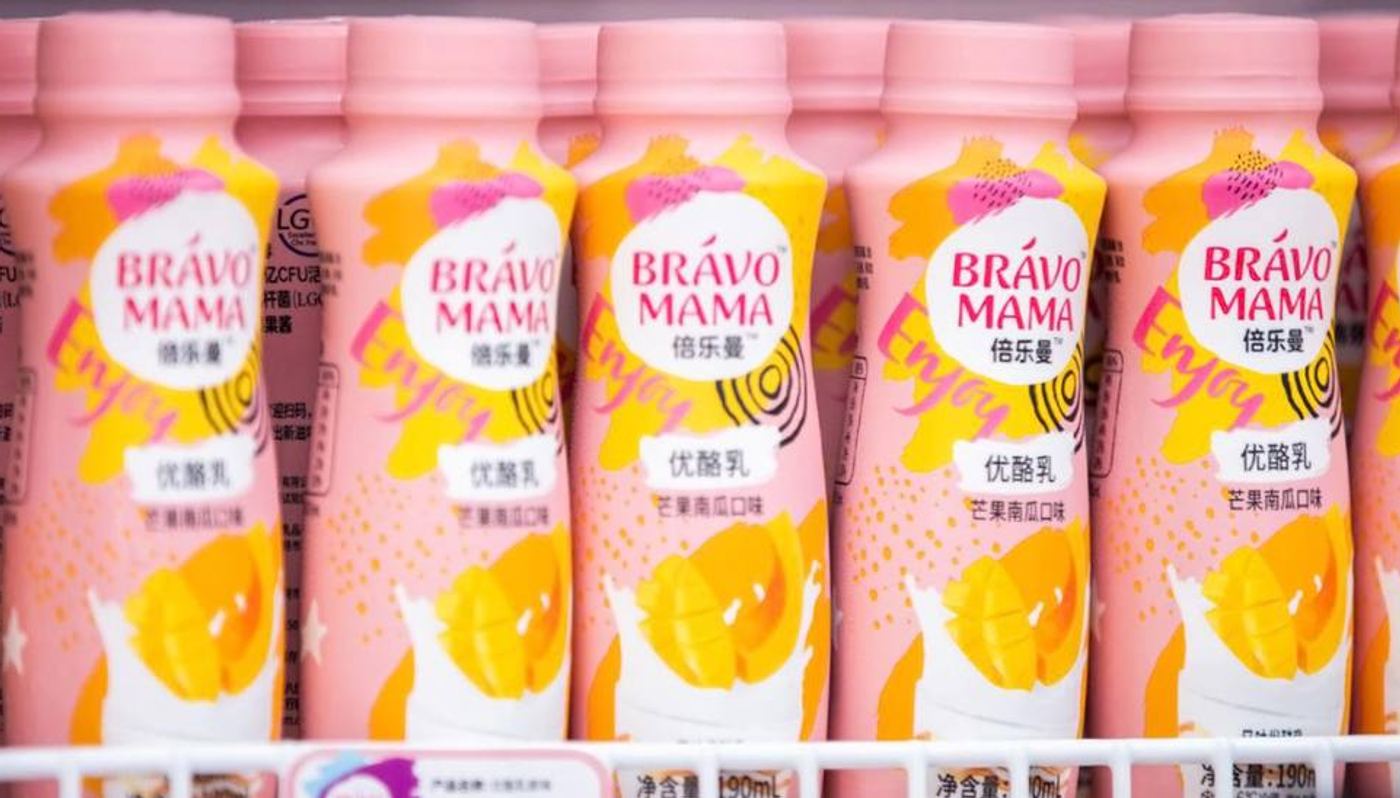
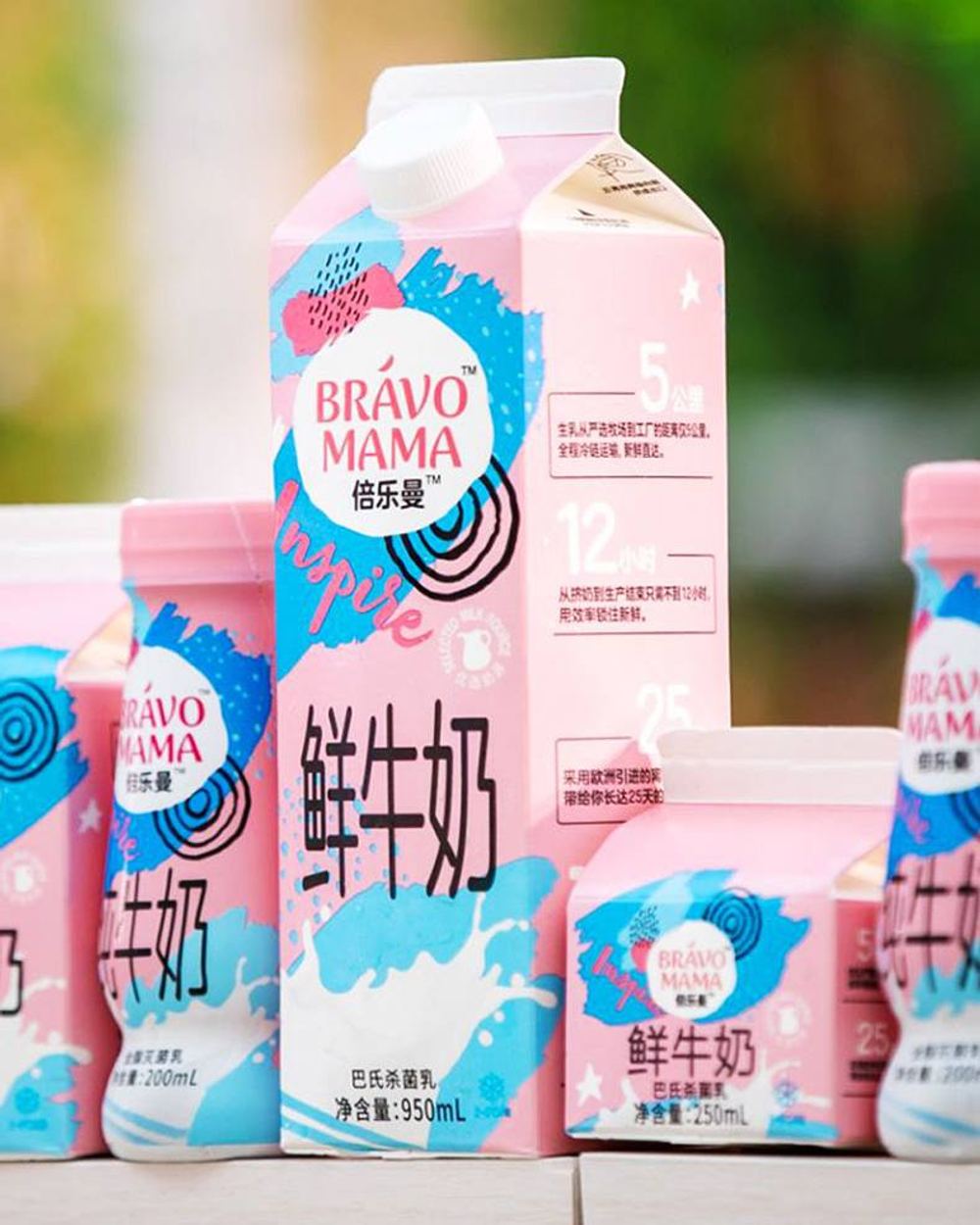
Expressive graphic art and a color palette no dairy brand in the category was using. Milk, drinking yogurt and fermented lines had to read as one brand at 200 ml and at 950 ml, in a chilled cabinet lit from above, next to competitors shouting in the same aisle. Fixed proportions rather than a set of individual packs.
Distribution was concentrated rather than spread: a single exclusive partner whose shopper base matched the target exactly, online and offline at once. A narrow launch made the brand visible where it mattered instead of invisible everywhere.
The identity had to survive an aisle where every competitor is shouting. Rather than shout louder, the system took a color territory nobody in chilled dairy was occupying and held it across every format, so the range reads as a single block from three meters away.
That system is also why the range could grow to twenty-three SKUs without a redesign: the proportions were fixed before the first pack was drawn.
Twenty-three SKUs, one national chain, and a foreign name on Chinese television.
Bravo Mama launched exclusively with Yonghui—online and offline—one of the largest retail chains in China, known for fresh and healthy assortment and for shoppers in exactly the cities the brand was built for.
The Shanghai launch presentation was covered by more than thirty media outlets and two national television channels. For a brand that did not exist eighteen months earlier, in a category where a foreign name is a liability, that coverage was the position itself.
SKU
Stores
Countries

